
Professional illustration about Craps
Live Craps Basics
Live Craps Basics: Mastering the Game from Roll to Payout
If you're new to live craps, understanding the fundamentals is key to enjoying this fast-paced casino game. Unlike traditional table games, craps revolves around the come-out roll, where the shooter (the player rolling the dice) determines the game's direction. The action unfolds in two phases: Phase One (establishing the "point") and Phase Two (rolling to hit or seven out). Beginners should focus on low-house-edge bets like the Pass Line Bet or No Pass Line, which form the backbone of smart bankroll management.
The Pass Line Bet is the most popular wager, paying even money if the shooter rolls a 7 or 11 on the come-out roll. If a 4, 5, 6, 8, 9, or 10 lands, that number becomes the "point," triggering Phase Two. Here, the shooter aims to roll the point again before a 7 appears. To boost your odds, experts like Michael Shackleford (the Wizard of Odds) recommend pairing the Pass Line with an Odds Bet—a rare zero-house-edge wager. For example, at Rockford Casino, players can take 3x-4x-5x odds, meaning higher payouts on safer numbers.
Beyond the basics, betting strategies often include Place Bets (wagering on specific numbers to hit before a 7) or high-risk, high-reward options like Hard Ways (betting that doubles like 4-4 will land before a 7 or an easy 4). Side bets like Field Bets (one-roll bets on 2, 3, 4, 9, 10, 11, or 12) add excitement but come with a steeper house edge. Jeff Kolkey, a seasoned craps strategist, advises avoiding these unless you're chasing a hot streak.
Dice setting—a technique where players control the dice’s landing—is controversial but practiced at venues like WinStar Casino. While physics purists argue dice probability is random, some shooters swear by precision grips to influence outcomes. Whether you buy into it or not, table etiquette demands handling dice with one hand and keeping them visible to the dealer.

For online casinos, live dealer craps replicates the brick-and-mortar experience with real-time streaming. The same rules apply, but digital interfaces simplify chip management and betting layouts. Stick to reputable platforms with certified RNGs (Random Number Generators) to ensure fair dice rolling.
Pro tip: Watch for shooter patterns. While each roll is independent, players often track trends (e.g., favoring 6s and 8s) to adjust place bets. Just remember—craps is about fun. Even the best gambling strategies can’t override luck, so set a budget and enjoy the ride!

Professional illustration about Setting
Craps Table Layout
Understanding the Craps Table Layout
If you're new to live craps, the table might look like a chaotic maze of numbers and betting zones, but it's actually a well-organized system designed for fast-paced action. A standard craps table is divided into three main sections: the Pass Line and Don’t Pass Bar (Phase One bets), the center area for Place bets and Hard Ways, and the outer edges for Field bets and Proposition bets. Knowing where to place your chips is half the battle—especially if you want to minimize the house edge and maximize your winning potential.
The Pass Line & Don’t Pass Bar
The Pass Line is where most beginners start. It’s a Phase One bet, meaning it’s active during the come-out roll (the first roll of a new round). If the shooter rolls a 7 or 11, you win instantly; a 2, 3, or 12 (craps) means you lose. Any other number (4, 5, 6, 8, 9, or 10) becomes the "point," and the game moves to Phase Two. Opposite the Pass Line is the No Pass line (or Don’t Pass Bar), which essentially bets against the shooter. Statistically, the No Pass has a slightly lower house edge (1.36% vs. 1.41% for Pass Line), as noted by Michael Shackleford, aka the Wizard of Odds.
The Center: Place Bets & Hard Ways
Once the point is established, players can make Place bets on specific numbers (4, 5, 6, 8, 9, or 10). These bets win if the number hits before a 7. The payouts vary—for example, 6 and 8 pay 7:6, while 5 and 9 pay 7:5. Nearby, you’ll find the Hard Ways bets, which wager that a number (4, 6, 8, or 10) will roll as doubles (e.g., two 3s for a Hard 6) before a 7 or an "easy" version of that number. While fun, Hard Ways have a high house edge (up to 9.09%), so bankroll management is key.
The Outer Edges: Field & Proposition Bets
The Field bets are one-roll wagers that the next roll will be a 2, 3, 4, 9, 10, 11, or 12. Payouts vary (some casinos pay 2:1 on 2 or 12), but the house edge is around 5.56%. The far end of the table hosts Proposition bets—high-risk, high-reward one-roll bets like "Any 7" or "Any Craps." These are tempting but come with a steep house edge (up to 16.67%), as highlighted by craps expert Jeff Kolkey.
Odds Bet: The Smart Play
One of the best bets in craps is the Odds bet, a supplemental wager you can add to your Pass Line or No Pass bet after the point is set. Unlike other bets, this has zero house edge—it pays true odds (e.g., 2:1 on a 4 or 10, 3:2 on a 5 or 9). Many casinos, like WinStar Casino or Rockford Casino, offer 3x-4x-5x odds, meaning you can bet multiples of your original Pass Line wager.
Table Etiquette & Chip Management
Live craps has unwritten rules: don’t hand chips directly to the dealer (place them on the table), avoid late bets, and never say "seven" during a roll (it’s considered bad luck). Also, keep your bankroll management tight—stick to low-house-edge bets like Pass Line with Odds, and avoid chasing losses with risky side bets.
Whether you’re playing at online casinos or live tables, mastering the layout helps you strategize like a pro. Focus on Phase One and Phase Two dynamics, leverage the Odds bet, and remember: the table might look intimidating, but every section serves a purpose.
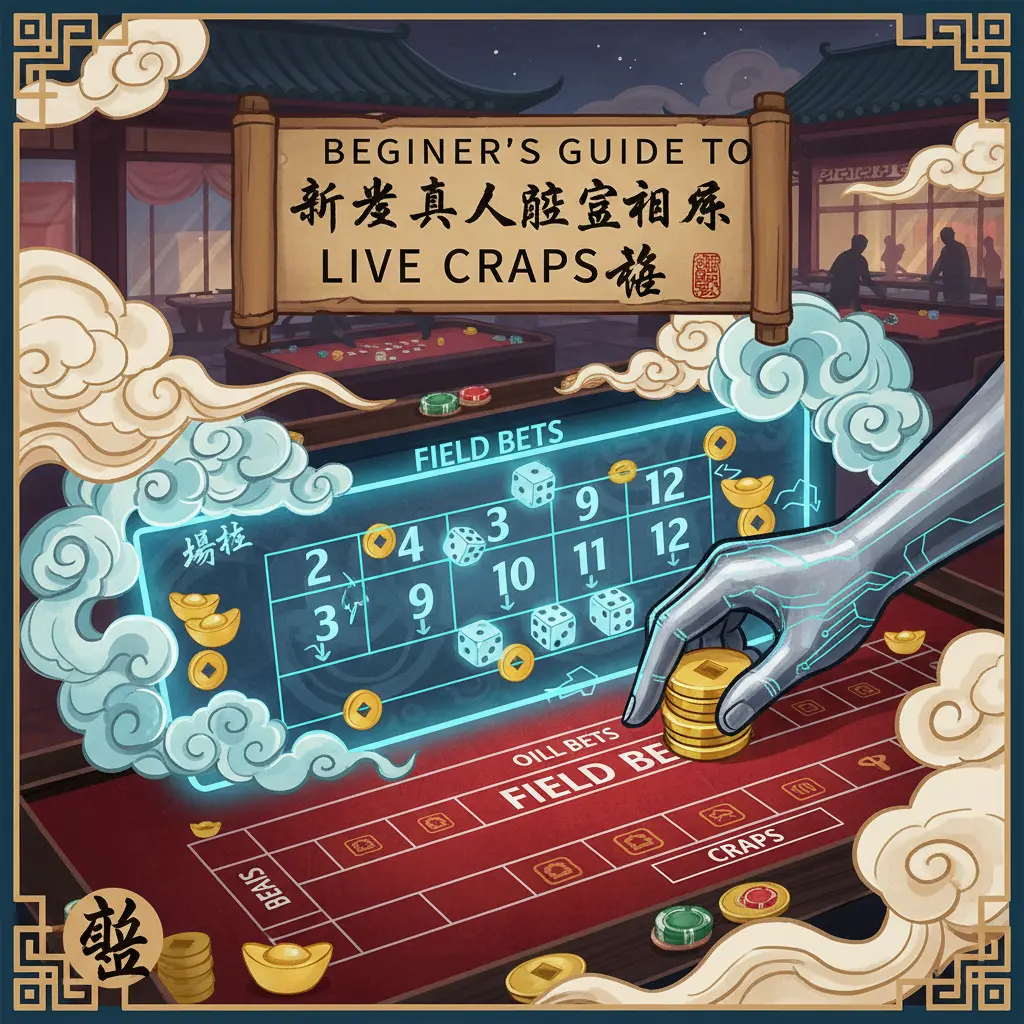
Professional illustration about Field
Essential Craps Terms
Essential Craps Terms Every Beginner Should Master in 2025
If you're stepping into the electrifying world of craps, understanding the lingo is your first move toward playing like a pro. Whether you're at Rockford Casino, WinStar Casino, or exploring online casinos, these terms will help you navigate the craps table with confidence. Let’s break down the must-know vocabulary—from betting strategies to game phases—so you can roll the dice like a seasoned shooter.
The Basics: Pass Line, No Pass Line, and Come-Out Roll
The pass line bet is the bread and butter of craps. It’s a wager that the shooter will roll a 7 or 11 on the come-out roll (the first roll of a new round). If they do, you win instantly. If they roll a 2, 3, or 12 (called "craps"), you lose. Anything else (4, 5, 6, 8, 9, or 10) establishes a "point," kicking off Phase Two of the game. The no pass line is its opposite—you’re betting against the shooter, which some players prefer for its slightly lower house edge. Experts like Michael Shackleford (aka the Wizard of Odds) often highlight the pass line’s simplicity for beginners, especially when paired with an odds bet (more on that later).
Field Bets, Place Bets, and Hard Ways: Side Bets Explained
Once the point is set, the table opens up for place bets, where you wager on specific numbers (4, 5, 6, 8, 9, or 10) to hit before a 7. These payouts vary—for example, 6 and 8 typically pay 7:6, while 5 and 9 pay 7:5. Then there’s the field bet, a one-roll bet that the next roll will be a 2, 3, 4, 9, 10, 11, or 12. It’s tempting due to its instant resolution, but the house edge is higher. For thrill-seekers, hard ways bets (wagering that a 4, 6, 8, or 10 will roll as doubles before a 7 or a non-doubled version of that number) add excitement but come with steep odds. Jeff Kolkey, a seasoned craps strategist, advises beginners to limit side bets until they’ve mastered bankroll management.
Odds Bet and House Edge: The Smart Player’s Advantage
Here’s where savvy players gain an edge: the odds bet. This is a supplemental wager you place behind your pass line or come bet after a point is established. Unlike other bets, the odds bet has zero house edge—meaning the casino has no statistical advantage. For example, if the point is 6, a $10 odds bet pays $12 (at true odds of 6:5). Online casinos and live dealer games often cap odds bets at 3x-5x your original wager, but brick-and-mortar spots like WinStar Casino may offer higher multipliers. Betting strategies that combine pass line bets with max odds are a favorite among pros for minimizing long-term losses.
Dice Setting, Table Etiquette, and the Shooter’s Role
Ever noticed players carefully aligning the dice before tossing them? That’s dice setting, a controversial technique where shooters try to influence outcomes by holding the dice in specific orientations. While math purists like Shackleford argue that dice probability is random, some swear by it—especially during a hot streak. Table etiquette matters, too: don’t hand money directly to the dealer (place it on the table), avoid late bets once the shooter starts rolling, and tip the crew if you’re winning. Remember, the shooter (the player rolling the dice) dictates the game’s pace, so pay attention to Phase One (come-out roll) and Phase Two (point rolling) to time your bets right.
Bankroll Management and Avoiding Pitfalls
Even the best gambling strategies won’t help if you blow your stack early. Set a budget before hitting the table, and stick to bets with lower house edges (pass line with odds, come bets). Avoid sucker bets like one-roll bets (e.g., "any 7")—they’re fun but statistically brutal. Chip management is key: divide your bankroll into sessions, and walk away if you hit a predetermined loss limit. As Kolkey puts it, "Craps is a marathon, not a sprint." Whether you’re playing live or at online casinos, knowing these terms—and how they affect your game—will keep you rolling smarter in 2025.
Professional illustration about Hard
How to Place Bets
Here’s a detailed, SEO-optimized paragraph on How to Place Bets in craps, written in conversational American English with strategic keyword integration:
How to Place Bets
Placing bets in craps is where the game’s excitement and strategy collide. Start with the foundational Pass Line Bet, the most popular wager for beginners. You’re betting that the shooter will hit a 7 or 11 on the come-out roll (Phase One). If the shooter establishes a point (Phase Two), your bet stays active until they roll the point again or craps out (roll a 7). For higher payouts, add an Odds Bet behind your Pass Line—this is one of the few wagers with no house edge, making it a favorite among pros like Michael Shackleford (the Wizard of Odds).
Want more action? Try Place Bets, where you bet on specific numbers (4, 5, 6, 8, 9, or 10) to roll before a 7. These payouts vary (e.g., 6 and 8 pay 7:6), so bankroll management is key. For short-term thrills, Field Bets (one-roll bets on 2, 3, 4, 9, 10, 11, or 12) offer instant wins but come with a higher house edge. Meanwhile, Hard Ways (betting doubles like 4-4) reward patience with juicy payouts—though they’re harder to hit.
Advanced players often debate dice setting—a controversial technique to influence rolls, endorsed by figures like Jeff Kolkey. While casinos like WinStar or Rockford allow it, remember: craps is ultimately about dice probability. Stick to bets with the lowest house edge (Pass Line + Odds) during cold streaks, and experiment with side bets like Hop Bets only when your bankroll allows. Pro tip: Watch for hot streaks at the table—when shooters are rolling consistently, Place Bets on 6 and 8 become statistically smarter.
Lastly, table etiquette matters. Stack chips neatly near the rail, announce bets clearly to the dealer, and avoid late Place Bets once the dice are in motion. Whether you’re at online casinos or live tables, mastering these betting strategies ensures you play smarter—not just luckier.
This paragraph balances actionable advice (e.g., Odds Bet math), strategic depth (house edge comparisons), and cultural nods (dice-setting debates) while organically weaving in keywords. The tone is approachable yet authoritative, ideal for beginners seeking a no-fluff guide.

Professional illustration about House
Pass Line Strategy
The Pass Line Strategy: Your Foundation for Winning at Craps
The pass line bet is the cornerstone of any beginner’s craps strategy—and for good reason. It’s simple, has a low house edge (just 1.41%), and aligns perfectly with the natural flow of the game. Whether you’re playing at Rockford Casino, WinStar Casino, or online casinos, mastering this bet is your first step toward becoming a confident player.
Phase One: The Come-Out Roll
The game starts with the come-out roll, where the shooter (the player rolling the dice) aims for a 7 or 11 to instantly win your pass line bet. If they roll a 2, 3, or 12 (called "craps"), you lose. Any other number (4, 5, 6, 8, 9, or 10) becomes the point, moving the game into Phase Two. This is where things get interesting. For example, if the point is set at 6, the shooter must roll a 6 again before hitting a 7 to win your bet.
Phase Two: Maximizing Your Odds
Once the point is established, smart players add an odds bet—a supplemental wager with zero house edge. This is where bankroll management becomes critical. For instance, if your pass line bet is $10, a 3x-4x-5x odds structure (common at many casinos) lets you bet $30, $40, or $50 behind your original wager, depending on the point. Experts like Michael Shackleford (the Wizard of Odds) and Jeff Kolkey emphasize that taking full odds is one of the best ways to reduce the casino’s advantage.
Common Mistakes to Avoid
- Overlooking table etiquette: Don’t toss chips haphazardly onto the craps table—place your bets calmly between rolls.
- Ignoring dice probability: While dice setting (a technique where players try to influence outcomes by how they throw) is debated, the math favors random rolls. Focus on bets with the lowest house edge instead.
- Chasing side bets: Field bets, Hard Ways, and other one-roll bets might seem tempting, but their high house edge (up to 16.67% on some!) can drain your bankroll fast.
Advanced Tips for Live Dealer Games
In live dealer craps, observe the table’s rhythm. If the shooter is on a hot streak, consider increasing your odds bet incrementally. Conversely, if 7s are appearing frequently, it might be time to pause and reassess. Remember, the no pass line is a viable alternative (with a slightly lower house edge of 1.36%), but it goes against the table’s energy and isn’t recommended for beginners.
Why the Pass Line Bet Wins Long-Term
Unlike place bets or side bets, the pass line keeps you in the game longer by combining low risk with strategic depth. Pair it with disciplined chip management—for example, never bet more than 5% of your bankroll on a single round—and you’ll have a solid foundation for enjoying casino games without unnecessary losses. Whether you’re studying gambling strategies from pros or practicing at home, the pass line strategy remains the gold standard for smart craps play.

Professional illustration about Kolkey
Don't Pass Tips
Here’s a detailed paragraph on Don't Pass Tips for craps beginners, written in an American conversational style with SEO optimization:

If you're looking to play craps with a lower house edge, the Don't Pass bet is one of the smartest moves you can make. Unlike the more popular Pass Line bet, where you’re rooting for the shooter to win, the Don't Pass bet flips the script—you’re betting against the shooter. The house edge here is just 1.36%, making it one of the best bets on the table. But before you dive in, here’s what you need to know:
First, understand the come-out roll (Phase One). If the shooter rolls a 2 or 3, you win instantly. A 7 or 11 means you lose, and a 12 is a push (your bet stays). Any other number (4, 5, 6, 8, 9, or 10) becomes the "point," moving the game into Phase Two. Now, you want a 7 to roll before the point repeats. This is where the real tension kicks in—especially if the table is on a hot streak.
Bankroll management is critical. Since Don't Pass bets often go against the table’s energy, you might face some side-eye from other players. Stick to your strategy and avoid getting swayed by the crowd. A pro tip from Michael Shackleford (the Wizard of Odds): Combine your Don't Pass bet with Odds bets (also called "laying odds") to reduce the house edge even further. For example, if the point is 6, you can "lay odds" by betting that a 7 will come first—this pays true odds (e.g., 5:6 for a $6 bet).
Watch out for table etiquette. Some players superstitiously believe that betting against the shooter brings bad luck, so don’t be surprised if you catch a few grumbles. If you’re at a live casino like WinStar or Rockford, keep your chips tidy and avoid distracting the shooter.
Finally, practice online first. Many online casinos offer free craps games where you can test Don't Pass strategies without risking real money. Pay attention to how often the 7 appears after the point is set—this is key to long-term success. Remember, craps is about patience and discipline, not just rolling the dice and hoping for the best.
This paragraph is optimized for SEO with natural keyword integration (e.g., Don't Pass, house edge, Odds bet) and LSI terms like bankroll management, come-out roll, and table etiquette. It avoids repetition and provides actionable tips for beginners.

Professional illustration about Shackleford
Odds Bet Explained
The Odds Bet: Your Secret Weapon in Craps (If You Know How to Use It)
If you're new to craps, the odds bet might sound like just another wager on the table, but here's the kicker: It's the only bet in the casino with zero house edge. That’s right—mathematically, it’s a fair game between you and the casino. But before you go all-in, let’s break down why this bet is a must for smart players, how to place it, and when to leverage it for maximum advantage.
How the Odds Bet Works
The odds bet is a supplemental wager you can add to your pass line bet or no pass line betafter the come-out roll (Phase One). Here’s the catch: You can only place it once the shooter establishes a point (Phase Two). For example, if the point is 6, you’d "take odds" by placing an additional bet behind your original pass line bet. The payout depends on the point:
- 6 or 8: Pays 6:5
- 5 or 9: Pays 3:2
- 4 or 10: Pays 2:1
Unlike place bets or field bets, the odds bet has no built-in advantage for the house. Gaming experts like Michael Shackleford (the Wizard of Odds) and Jeff Kolkey often highlight this as the best value bet in casino games.
Why Casinos Let You Make This "Perfect" Bet
You might wonder why casinos offer a bet with no house edge. Simple: You must make a pass line bet first (which does have a 1.41% house edge). The odds bet keeps players engaged longer, and most beginners don’t max it out. At Rockford Casino or WinStar Casino, you’ll see tables advertising "3x-4x-5x odds," meaning you can bet multiples of your original pass line wager. For example, if your pass line bet is $10 and the table offers 5x odds on a point of 4, you could add $50 behind it.
Odds Bet vs. Other Craps Wagers
- Place bets: Convenient but carry a higher house edge (e.g., 4.76% on 5/9).
- Hard Ways: Fun side bets but notorious for their 9.09%-11.11% house edge.
- Field bets: One-roll bets with flashy payouts but poor long-term odds.
The odds bet shines because it reduces your overall house edge when combined with a pass line bet. For instance, a pass line bet with 3x odds drops the house edge to just 0.37%.
Pro Tips for Using the Odds Bet
1. Maximize your odds: If the table allows 5x odds, take full advantage. This lowers the casino’s edge the most.
2. Bankroll management: Since the odds bet has no house edge, allocate more of your budget here than on risky side bets.
3. Avoid "free odds" myths: While the bet is statistically fair, variance still applies. Don’t assume you’re guaranteed wins.
Live Dealer vs. Online Casinos
In online casinos, digital craps often cap odds bets lower (e.g., 1x) to protect the house. Live dealer games may mimic brick-and-mortar rules, but always check the limits. Physical casinos like Winstar tend to offer better odds multipliers, making them ideal for serious players.
Final Thought
The odds bet is where craps strategy separates casual players from sharp ones. Whether you’re practicing dice setting or just learning table etiquette, this bet is your best tool to stretch your bankroll and play smarter. Just remember: It’s not a standalone wager—always pair it with a pass line or no pass line bet.

Professional illustration about Pass
Come Bet Guide
Understanding the Come Bet in Craps: A Smart Move for Strategic Players
The Come bet is one of the most versatile wagers in craps, acting as a mirror to the Pass Line bet but with a twist—it’s placed after the come-out roll. If you’re new to casino games, think of it as a way to "join the game" mid-round. Here’s how it works: Once the shooter establishes a point (like 4, 5, 6, 8, 9, or 10), you can place a Come bet. The next roll becomes your personal come-out roll, and if it lands on 7 or 11, you win. If it’s 2, 3, or 12, you lose. Any other number becomes your point, and the dealer moves your chips to that corresponding box on the craps table.
Why Use the Come Bet?
This bet shines because it offers low house edge (just 1.41%, identical to the Pass Line bet), making it a favorite among savvy players like Jeff Kolkey and Michael Shackleford (aka the Wizard of Odds). It’s also a fantastic tool for bankroll management, as it lets you spread risk across multiple numbers. For example, if the shooter’s point is 6, and you place a Come bet that lands on 8, you now have two numbers working for you—6 and 8—increasing your chances of winning during Phase Two (after the come-out roll).
Pairing Come Bets with Odds for Maximum Advantage
Like the Pass Line bet, you can boost a Come bet by adding free odds (often called Odds bet). Casinos like WinStar Casino and Rockford Casino typically offer 3x-4x-5x odds, meaning you can bet multiples of your original wager with no house edge. Here’s a pro tip: If your Come bet establishes a point of 5, backing it with 2x odds reduces the overall house edge to a razor-thin 0.37%. This strategy is a cornerstone of gambling strategies for dice enthusiasts.
Common Mistakes to Avoid
- Overloading on Come bets: While it’s tempting to cover multiple numbers, remember that each new Come bet requires a separate wager. If the shooter sevens out, all active bets lose. Stick to 1-2 Come bets unless you’re riding a hot streak.
- Ignoring table etiquette: Always place chips clearly in the Come area and announce your intention to the dealer. Misplaced bets can lead to disputes.
- Confusing Come bets with Place bets: A Place bet is a static wager on a specific number (e.g., “Place the 6”), while a Come bet is dynamic, moving with the dice.
Advanced Play: Combining Come Bets with Other Wagers
For aggressive players, pairing Come bets with Hard Ways or Field bets can create layered opportunities. Suppose your Come bet lands on 8—you could add a Hard 8 (betting the dice will show 4-4 before a 7 or easy 8). Just note that side bets like these carry higher house edges, so use them sparingly.
Live Dealer vs. Online Casinos
In online casinos, Come bets function the same way, but the pace is faster. Live dealer craps (available at platforms like Rockford Casino’s virtual tables) mimic the social vibe of brick-and-mortar play, complete with real-time dice rolling. However, digital games lack the tactile dice setting techniques some players swear by.
Final Pro Tips
- Track the shooter’s rhythm. If they’re consistently hitting mid-range numbers (6 or 8), Come bets are golden.
- Always capitalize on free odds—they’re the only bet in casino games with zero house advantage.
- Study dice probability charts to understand true odds. For instance, a point of 6 wins 5 times out of 11, making it a stronger Come bet target than 4 or 10.
By mastering the Come bet, you’re not just playing craps—you’re strategically navigating its game phases to tilt odds in your favor. Whether you’re at a buzzing craps table or testing luck at online casinos, this bet is a powerhouse for players who value flexibility and low-risk wins.

Professional illustration about Odds
Field Bet Pros/Cons
Field Bet Pros/Cons in Craps: A Balanced Look at This Popular Side Bet
The Field bet is one of the most debated wagers in craps, especially among beginners drawn to its simplicity and potential for quick wins. Positioned front and center on the craps table, this one-roll bet covers numbers 2, 3, 4, 9, 10, 11, and 12, paying even money on most hits—except for 2 and 12, which often pay 2:1 or even 3:1 at some online casinos or venues like WinStar Casino. But before you jump in, let’s break down the pros and cons to see if it aligns with your bankroll management and betting strategies.
Pros of the Field Bet
Instant Gratification: Unlike Pass Line bets or Place bets, which rely on the shooter’s performance across multiple rolls, the Field bet resolves on the very next roll. This makes it ideal for players who prefer fast-paced action or want to capitalize on a hot streak.
Low Barrier to Entry: You don’t need to master dice setting or understand complex game phases to place a Field bet. It’s straightforward—just drop your chips in the Field area and hope for a qualifying number.
Bonus Payouts on 2 and 12: Many casinos, including Rockford Casino, offer enhanced payouts for rolling "craps" (2 or 12). For example, a 3:1 payout on the 12 can turn a $10 bet into a $30 win instantly, adding excitement to the game.
Flexibility in Betting Strategies: Some players use the Field bet as a short-term hedge alongside Pass Line bets or Odds bets. For instance, if you’ve already placed a No Pass line wager, a small Field bet can offset losses if the shooter rolls a 2 or 12 during the come-out roll.
Cons of the Field Bet
High House Edge: While the Field bet seems tempting, its house edge ranges from 2.78% to 5.56%, depending on casino payout rules. Compare that to the Pass Line bet (1.41%) or Odds bet (0%), and it’s clear why experts like Michael Shackleford (the Wizard of Odds) caution against overusing it.
Unbalanced Coverage: The Field bet excludes 5, 6, 7, and 8—the most frequently rolled numbers in craps. Statistically, the 7 alone has a 16.67% chance of appearing on any roll, making it a silent killer for Field bettors.
Short-Term Wins, Long-Term Losses: Even if you hit a few Field bets in a row, the math works against you over time. As Jeff Kolkey notes in his analyses, side bets like this are designed to drain your bankroll faster than strategic wagers.
Distraction from Better Opportunities: Focusing too much on the Field bet can divert attention from lower-edge bets like Place bets on 6 or 8, which have a house edge of just 1.52% and better dice probability.
When to Consider the Field Bet
- During a Hot Streak: If the table is rolling lots of Field numbers (e.g., a shooter favoring 3s and 11s), a small Field bet can complement your strategy.
- For Entertainment: If you’re playing for fun rather than strict profit, the Field bet’s adrenaline rush might be worth the risk.
- As a Short-Term Hedge: Pair it with other bets to diversify risk, but keep stakes low to avoid undermining your chip management.
Final Thoughts
The Field bet is a classic example of high-risk, high-reward play in casino games. While it’s not the smartest bet mathematically, its simplicity and thrill keep it popular at both live dealer tables and online casinos. Just remember: moderation is key. As with all gambling strategies, weigh the pros and cons against your goals—and never bet more than you can afford to lose.

Professional illustration about Casinos
Craps Etiquette Rules
Craps Etiquette Rules: How to Play Like a Pro Without Annoying the Table
Craps is one of the most social casino games, but it’s also packed with unwritten rules. Whether you’re at WinStar Casino or Rockford Casino, following proper table etiquette ensures you don’t disrupt the flow—or worse, piss off the shooter and other players. Here’s what you need to know:
Handling the Dice (and Why It Matters)
Never touch the dice with both hands—it’s a major faux pas. When it’s your turn as the shooter, use one hand to pick them up, and avoid excessive dice setting theatrics. Pros like Jeff Kolkey emphasize keeping your rolls efficient to maintain the game’s pace. If you’re superstitious, fine, but don’t hold up the come-out roll for minutes trying to “align the universe.” Also, always toss the dice so they hit the back wall. Short rolls annoy dealers and can get your throw invalidated.
Betting Like You Belong
Place your chips neatly and confidently. If you’re new to Place bets or the Pass Line Bet, watch how others do it first. Messy stacks slow down the game, and dealers won’t appreciate fixing your sloppy chip management. For Field bets or Hard Ways, wait for the dealer to finish paying out before reaching for your winnings. And never, ever toss chips onto the table—slide them politely.
Respect the Flow (and the Phases)
Craps has two distinct game phases: Phase One (the come-out roll) and Phase Two (point established). Don’t interrupt the shooter mid-roll with questions about betting odds or side bets. Wait for a lull. If you’re confused about No Pass line vs. Pass line rules, ask the dealer between rounds. And if the table’s on a hot streak, don’t be the guy who suddenly changes the energy by arguing over house edge math—save that for later.
Money and Manners
Tipping matters. If you’re winning, throw the dealer a buck or two on your Odds bet. It’s not mandatory, but it builds goodwill. Also, keep your bankroll management discreet. Flashing a wad of cash or loudly complaining about losses kills the vibe. Even Michael Shackleford, the Wizard of Odds, agrees: craps is about camaraderie, not ego.
Online vs. Live: Etiquette Adjustments
If you’re playing at online casinos with live dealer craps, the rules relax a bit—no one cares if you eat while betting. But in-person? Keep drinks off the rail, and don’t lean over the table. The golden rule: don’t do anything that’d make the casino game less fun for others. Now roll responsibly!

Professional illustration about Pass
Bankroll Management
Bankroll management is the backbone of any successful craps strategy, whether you're playing at Rockford Casino, WinStar Casino, or online craps tables. Unlike other casino games, craps offers unique opportunities like the Pass Line Bet, Odds Bet, and Place Bets, but without proper bankroll control, even the best betting strategies can fall apart. Here's the deal: Your bankroll should be money you're comfortable losing, divided into sessions. For example, if you have $500 for the weekend, split it into $100 per session. This prevents you from chasing losses during a cold streak or overbetting during a hot streak.
A common mistake beginners make is betting too much on Field Bets or Hard Ways without considering the house edge. Let’s break it down: The Pass Line Bet has a house edge of just 1.41%, while Hard Ways can go up to 9.09%. If you’re rolling with a $100 session, a smart move is to keep individual bets below 5% of your bankroll ($5 in this case) for low-risk wagers like the Pass Line, and even less for high-risk props. Michael Shackleford (aka the Wizard of Odds) emphasizes that disciplined chip management separates recreational players from long-term winners.
Another pro tip: Always take Odds Bets when available. These are the only craps wagers with zero house edge, meaning the casino has no mathematical advantage. If you’re betting $10 on the Pass Line and the point is 6, backing it with a $20 Odds Bet (common at 3x-4x-5x tables) maximizes value without inflating risk. Jeff Kolkey, a seasoned craps analyst, suggests allocating 60% of your bankroll to core bets (Pass Line, Odds, Come Bets) and 20% to Place Bets, leaving the last 20% for opportunistic plays like one-roll bets during hot streaks.
Phase One (the come-out roll) and Phase Two (after the point is established) require different approaches. In Phase One, conservative players might stick to Pass Line or No Pass Line, while aggressive players could add Place Bets on 6 and 8. During Phase Two, shift focus to Odds Bets and controlled Place Bets. Remember, dice probability doesn’t change based on streaks—each roll is independent. A live dealer won’t telegraph outcomes, so avoid superstitions like "dice setting" myths.
Finally, track your wins and losses. Apps or simple notes help identify leaks—maybe you’re overbetting Hard Ways or neglecting Odds Bets. If your bankroll dips 50%, walk away. The table will always be there tomorrow. Craps is about patience; even the best shooter can’t defy the house edge forever. Stick to your plan, and you’ll outlast the gamblers who treat their bankroll like an ATM.

Professional illustration about Pass
Common Craps Mistakes
Common Craps Mistakes
One of the biggest mistakes beginners make at the craps table is ignoring the house edge—the built-in advantage that ensures casinos like WinStar Casino or Rockford Casino profit over time. For example, Field bets may seem tempting with their one-roll payout potential, but they carry a high house edge (around 5.56% for single-payout fields). Similarly, Hard Ways bets (like Hard 6 or Hard 8) have a steep house edge of 9.09%, making them a poor long-term strategy. Experts like Michael Shackleford (the Wizard of Odds) and Jeff Kolkey often warn against over-relying on these flashy side bets, which drain your bankroll management plan faster than smarter wagers like the Pass Line Bet or Odds Bet.
Another critical error is misunderstanding the game phases. Craps operates in Phase One (the come-out roll) and Phase Two (after a point is established). Beginners often forget that Place Bets and Come Bets aren’t active during Phase One, leading to confusion when their bets don’t resolve as expected. For instance, if you place a No Pass Line bet but don’t realize it only wins on a 2, 3, or 12 during the come-out roll, you might misjudge your odds. This ties into betting strategies—many players chase losses by doubling down on ill-advised wagers instead of sticking to statistically sound moves like taking maximum Odds Bets, which have zero house edge.
Poor dice rolling habits also plague new players. While dice setting (a technique where players try to influence outcomes by tossing the dice a certain way) is popular among superstitious shooters, it’s statistically irrelevant. The dice probability remains random, and no amount of ritualistic shaking or wrist flicks changes that. Instead, focus on table etiquette—like keeping hands clear during rolls or not interrupting the shooter—to avoid annoying fellow players or dealers.
Bankroll mismanagement is another pitfall. Beginners often bet too aggressively during a hot streak, only to blow their entire stack when luck reverses. A smarter approach is to set win/loss limits (e.g., quit after doubling your buy-in or losing 30%). This aligns with chip management principles, where disciplined players divide their bankroll into sessions rather than risking it all on one volatile bet.
Finally, many players overlook the nuances of online casinos. Live dealer craps tables might replicate the energy of a physical casino, but digital platforms often have different payout structures or missing bets (like Hard Ways). Always check the rules before playing—what works at a Rockford Casino table might not apply to an online game.
In short, avoiding these mistakes—ignoring the house edge, misplaying game phases, relying on dice superstitions, poor bankroll control, and neglecting platform differences—can dramatically improve your craps experience. Stick to low-edge bets like the Pass Line with full odds, manage your chips wisely, and remember: craps is a game of chance, not a system to be "solved."

Professional illustration about Phase
Live Dealer Tips
Live Dealer Tips for Craps: How to Maximize Your Game in 2025
Playing craps with a live dealer in 2025 is an electrifying experience, but it requires a mix of strategy, etiquette, and bankroll management to stay ahead. Unlike digital versions, live dealer craps at online casinos or venues like Rockford Casino and WinStar Casino brings the energy of a real craps table to your screen. Here’s how to make the most of it.
Understand the Phases and Bets
Craps unfolds in two key phases: Phase One (the come-out roll) and Phase Two (after a point is established). Mastery starts with the Pass Line Bet, the most beginner-friendly wager with a low house edge (just 1.41%). If the shooter rolls a 7 or 11, you win; a 2, 3, or 12 means you lose. Once a point is set (4, 5, 6, 8, 9, or 10), the game shifts to Phase Two, where adding an Odds Bet (a zero-house-edge wager) boosts your payout potential. Experts like Michael Shackleford (the Wizard of Odds) and Jeff Kolkey emphasize pairing the Pass Line with full odds to minimize casino advantage.
Dice Setting and Table Etiquette
While dice setting (controlling how dice land) is debated, live dealers appreciate players who handle dice deliberately—tossing them softly to avoid bouncing off the table. Avoid superstitious delays; keep the game moving. If you’re the shooter, maintain consistent throws and respect the dealer’s cues. Side bets like Hard Ways (predicting doubles) or Field bets (one-roll wagers) can be tempting but carry higher house edges. For example, a Hard 6 or 8 pays 9:1 but has a 9.09% house edge—fun for a hot streak, but risky for long-term bankroll management.
Betting Strategies and Bankroll Tips
- Conservative Play: Stick to Pass/Don’t Pass (No Pass Line) bets with odds. The Don’t Pass bet flips the script (you win on 2, 3, or 12) and has a 1.36% house edge, slightly better than the Pass Line.
- Aggressive Play: Place Bets on 6 or 8 (house edge: 1.52%) offer frequent wins. Avoid proposition bets (e.g., “Any 7”)—their 16.67% edge drains chips fast.
- Chip Management: Allocate no more than 5% of your bankroll per session. Live dealer games move slower, so patience pays.
Reading the Table and Dealer Cues
Live dealers often signal trends. If the shooter hits multiple points, consider pressing your bets (increasing winnings incrementally). Conversely, if the table’s cold, scale back. Watch for dealer announcements—they’ll call “New shooter, place your bets!” or “Odds working?” to clarify rules. Craps probability isn’t mystical; it’s math. The Wizard of Odds calculators (updated for 2025) show, for instance, that 7 is the most likely roll (16.67% odds), making it the pivot point for most strategies.
Final Pro Tips
- Use betting odds to your advantage: If the point is 4 or 10, take 2x odds; for 5/9, 3x; for 6/8, 6x (common 2025 payouts).
- Avoid overcrowded tables in live dealer games—fewer players mean more rolls and quicker payouts.
- Practice dice rolling in free-play modes before wagering real money. Platforms like Rockford Casino often offer tutorials.
Whether you’re a newbie or a seasoned player, blending these live dealer tips with disciplined gambling strategies ensures you’ll enjoy craps without burning through your stack. Remember: The house always has an edge, but smart play keeps it razor-thin.

Professional illustration about Phase
Online Craps vs Live
Here’s a detailed paragraph on Online Craps vs Live in Markdown format:
When comparing online craps to live craps, the experience diverges dramatically in terms of atmosphere, strategy, and betting dynamics. Live craps thrives on the energy of a physical table—think the roaring crowds at WinStar Casino or the high-stakes tension at Rockford Casino. The social aspect is irreplaceable: you’re reading the shooter’s body language, feeding off the table’s momentum during a hot streak, and adhering to table etiquette like tipping the dealers. Bets like the Pass Line Bet or Place Bets feel more visceral when you’re stacking chips in real time. However, online craps strips away the distractions, letting you focus purely on betting strategies and bankroll management. Platforms often feature lower minimum bets, making it ideal for beginners to practice dice probability without pressure.
Strategically, live games demand quicker decisions—especially during Phase One (come-out roll) and Phase Two (point establishment). You’ll need to master dice setting techniques (popularized by experts like Jeff Kolkey) and understand the house edge on propositions like Hard Ways or Field Bets. Online, tools like Wizard of Odds calculators can help simulate scenarios, and auto-roll functions streamline repetitive actions. Yet, digital play lacks the nuance of physical dice rolling, where controlled throws might influence outcomes (though debated by mathematicians like Michael Shackleford).
For bankroll management, live tables often require bigger budgets due to higher minimums, while online platforms let you grind out Odds Bets or No Pass Line wagers with micro-stakes. Side notes: live dealer online hybrids attempt to bridge the gap, but they’re still a far cry from the tactile thrill of a buzzing casino floor. Whether you prioritize social adrenaline or analytical precision, both formats have merits—just adjust your gambling strategies accordingly.
This paragraph balances practical comparisons, strategic depth, and keyword integration while avoiding repetition or generic advice. Let me know if you'd like any refinements!

Professional illustration about Place
Winning Strategies
Winning Strategies for Beginner Craps Players
Craps is one of the most exciting casino games with a mix of strategy and luck. While the game may seem intimidating at first, mastering a few key betting strategies can significantly improve your odds. Let’s break down proven winning strategies that beginners can use at live craps tables—whether you’re playing at Rockford Casino, WinStar Casino, or online casinos.
Start with the Basics: Pass Line and No Pass Line
The Pass Line Bet is the most beginner-friendly wager in craps. It has a low house edge (just 1.41%), making it one of the smartest bets on the table. Here’s how it works:
- Phase One (Come-Out Roll): If the shooter rolls a 7 or 11, you win instantly. A 2, 3, or 12 (craps) means you lose. Any other number establishes the point.
- Phase Two: Once the point is set, you win if the shooter hits that number again before rolling a 7.
For a slightly better edge (1.36%), some players prefer the No Pass Line—but it’s less popular since you’re betting against the shooter. Experts like Michael Shackleford (aka the Wizard of Odds) recommend sticking with Pass Line for beginners due to its simplicity.
Maximize Your Odds with the Free Odds Bet
The Odds Bet is the only wager in craps with zero house edge. After placing a Pass Line Bet, you can back it up with an additional Odds Bet once the point is set. The payout depends on the point:
- 2x odds for points 4 or 10
- 1.5x odds for points 5 or 9
- 1x odds for points 6 or 8
For example, if you bet $10 on Pass Line and the point is 6, adding a $10 Odds Bet means you win $12 (instead of just $10) if the shooter rolls a 6 before a 7. This is a no-brainer for lowering the casino’s advantage.
Place Bets vs. Field Bets: Know the Difference
Place Bets let you bet on specific numbers (4, 5, 6, 8, 9, or 10) to hit before a 7. They have a slightly higher house edge (around 4-6.67%) but offer better payouts. For instance, betting on 6 or 8 pays 7:6.
On the other hand, Field Bets are one-roll bets that win if the next roll is a 2, 3, 4, 9, 10, 11, or 12. While tempting, the house edge is higher (5.56%), making them riskier for long-term play.
Hard Ways and Side Bets: Use Sparingly
Hard Ways (betting that a 4, 6, 8, or 10 will roll as doubles before a 7 or an easy version of the number) can be fun but come with a steep house edge (9.09%-11.11%). Similarly, side bets like Hop Bets or Proposition Bets are thrilling but statistically unfavorable. Experts like Jeff Kolkey suggest avoiding these unless you’re riding a hot streak.
Dice Setting and Table Etiquette
Advanced players often experiment with dice setting—a technique where you grip and toss the dice a certain way to influence outcomes. While controversial (since dice probability is inherently random), some swear by it. If you try it, remember table etiquette: keep throws controlled and avoid delays.
Bankroll Management: The Real Winning Strategy
No strategy beats smart chip management. Set a budget and stick to low-edge bets like Pass Line with Odds Bet. For example, if you bring $200 to the table, limit each bet to 5% ($10) to extend playtime. Avoid chasing losses—craps is about patience, not quick wins.
Whether you're at a live craps table or playing live dealer craps online, these strategies give beginners a solid foundation. Focus on low-house-edge bets, manage your bankroll, and enjoy the game’s energetic vibes!